Storing Bullion at Home: What Australian Contents Insurance Actually Covers
The structural gap between household cover and physical bullion — and how specialist vault insurance is built differently.
The safest place for physical bullion is often assumed to be at home — in a safe, a drawer, or a discreet corner — protected by the household contents policy. For a wide range of household goods, that logic holds. For physical gold and silver, the position is materially different, and the gap between assumed cover and actual cover is one of the most consistent themes in the Australian home insurance market as it applies to precious metals.
How Australian contents insurance is structured
An Australian home contents policy pays out for loss or damage caused by specific insured events — typically fire, theft, storm and impact damage — up to a total sum insured figure nominated by the policyholder. Within that total, ASIC’s Moneysmart guidance notes, insurers apply sub-limits: category-specific caps that limit how much can be claimed for particular types of item.
Sub-limits exist because certain items are high-value, portable, and disproportionately targeted in theft. Jewellery, watches, artwork, collections and cash are the standard sub-limited categories. Where an item’s value exceeds its category sub-limit, most policies require it to be “specified” or “listed” individually, with the value declared to the insurer in advance and an additional premium reflecting the higher cover.
The unspecified-valuables cap
Common across the industry is the “unspecified” or “unlisted” valuables limit. Unspecified valuables are items the policyholder holds without individually declaring them; they are covered under general contents up to a category cap. Beyond that cap, cover ceases unless items are individually specified.
Ranges vary between insurers, but per-item and total unspecified caps are typically modest by the standards of a substantial physical bullion holding — usually in the low thousands of dollars. Some policies do not offer unspecified valuables cover at all. Specified cover, where available, requires the item to be described, valued and listed on the policy schedule with evidence of value — and is only available for categories the insurer agrees to specify.

The bullion-specific position
Australian insurers do not treat physical bullion consistently. The market broadly splits into two positions.
The first excludes bullion entirely from contents cover. Industry summaries of common Australian contents exclusions note that a category covering “uncut gems, unset gems, gold or silver nuggets, bullion or ingots” appears in identical or near-identical wording across the Product Disclosure Statements of a number of major Australian insurers.
The second position includes bullion but treats it as part of a collection subject to a low sub-limit — typically an amount that would cover a small holding but not a substantial one, and capped at the collection sub-limit regardless of the underlying value unless the items are individually specified.
Some policies occupy a middle position, covering coins within a collection but not bars, or covering bars only up to defined thresholds. The actual position for any given policy can only be determined by reading the specific wording of its PDS.
The gap between assumed and actual cover
Two dynamics compound the divergence between what many policyholders assume and what their policy actually says.
The first is that policies are not routinely re-read. A November 2023 survey of 1,000 Australians commissioned by iSelect found that 42% did not regularly review and update their contents insurance policy each year, or ever. Sub-limits and category definitions that were checked at inception often go unchecked afterwards, even as household holdings change.
The second is the pace of change in bullion values relative to sub-limits. Sub-limits are nominal dollar amounts set by the insurer and reviewed periodically; they do not track precious metals spot prices. A capped aggregate amount covers a materially different quantity of physical bullion at $2,000 an ounce than at $3,000. The nominal cap is unchanged; the effective coverage in ounces has shrunk.
The physical dimension
Insurance is only one axis of the home storage question. The physical risks — targeted theft, fire, flood, and the practical challenge of storing meaningful weight in silver — apply whether or not a policy ultimately pays out. Household safes vary widely in fire and burglary rating, and are frequently visible or predictably located to anyone familiar with the space.
Why safe deposit box storage exists
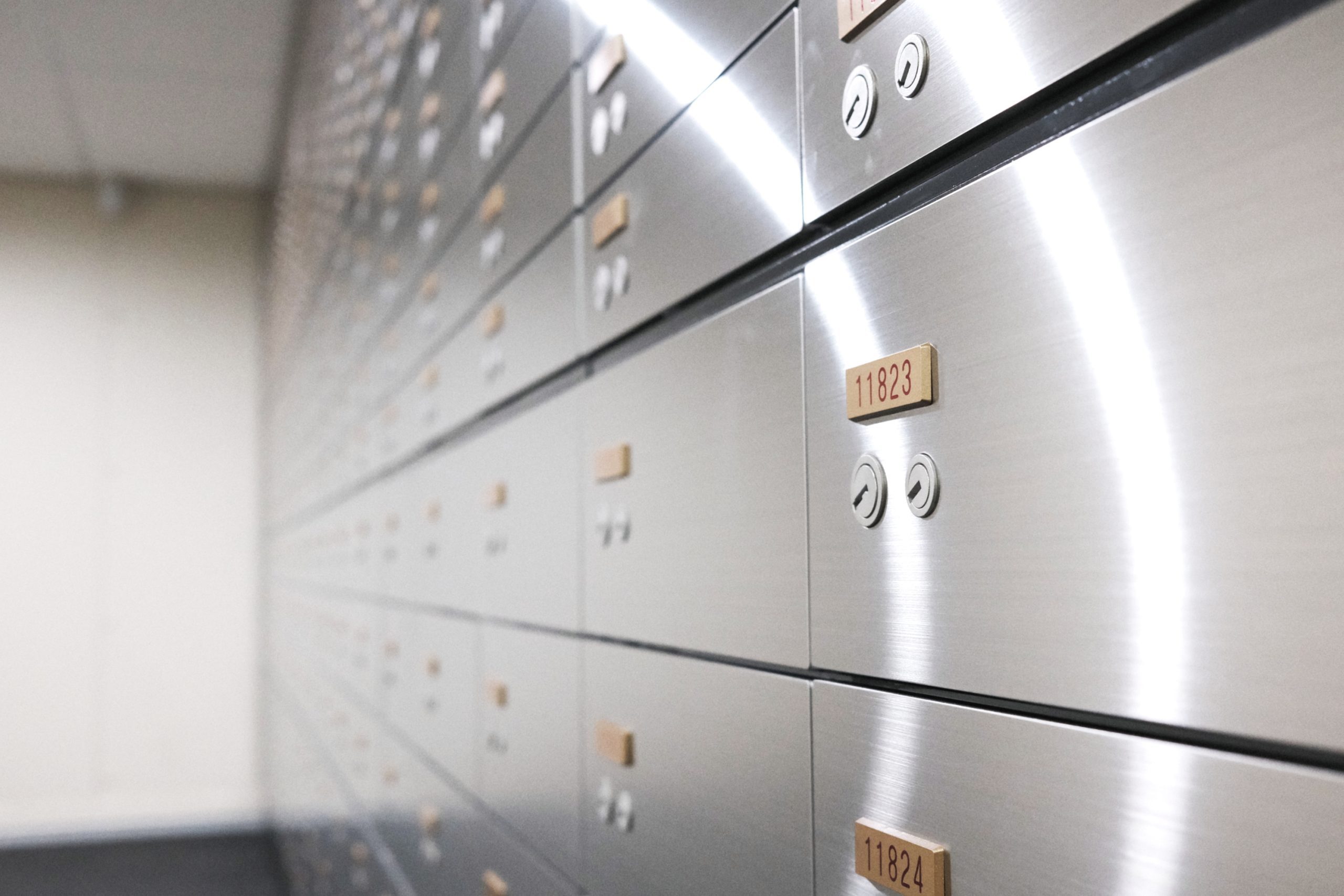
Safe deposit box facilities emerged historically to address precisely these limitations. The structure is straightforward: purpose-built high-security vaults, individual segregated storage, and specialist insurance underwriting rather than standard household cover.
Guardian Vaults opened in 2002 as Australia’s first private non-bank safe deposit box facility, and has grown to four secure vaulting facilities across Sydney and Melbourne, with over 900 metric tonnes of storage capacity across more than 30,000 individual safe deposit boxes and safes.
The insurance arrangement is fundamentally different from standard home contents cover. Every Guardian Vaults safe deposit box is issued with $10,000 of complimentary insurable interest coverage as standard, with additional insurable interest coverage available on request. The underlying insurance is underwritten by Lloyd’s of London, the specialist market that has priced precious-metals risk for centuries. The Lloyd’s structure applies to precious metals specifically, without the “collections” sub-limits, “money” reclassifications and bullion exclusions that characterise the domestic contents insurance market.
There is also a structural point about ownership. Bullion held in a Guardian Vaults safe deposit box remains the sole legal entitlement of the box holder, stored off the company’s balance sheet — which removes third-party credit and liquidation risks associated with pooled or unallocated storage arrangements.
Where the position sits
Home contents insurance was not designed with physical bullion in mind. Specialist vault insurance was. The two frameworks are structurally different, and the difference is entirely determined by what each policy actually says. For anyone weighing storage arrangements, that is where any accurate reading has to start — with the wording, on both sides.
Learn More
If you’re considering a safe deposit box for storing bullion, see our prices and sizes below: