The process of turning ore into gold bars can be complicated, with several stages required to produce 99.9 per cent investment-grade assets.
However, if you are keen to learn more about how refining works before making your next investment in gold, here is a quick summary by the Perth Mint.
Gold dore bars
Before the gold even makes it to the refinery, miners have to use a number of techniques to create an alloy from the ore they dig up. This is mainly composed of a gold and silver blend, with the resulting product called a ‘dore’ bar.
While the composition will vary depending on the mine, the Perth Mint confirmed the dore bars it primarily handles are approximately 70-80 per cent gold and 10-15 per cent silver.
The bars are weighed and melted to check whether there are any pockets of high or low purity, after which a sample is taken and assayed. This is a procedure used to confirm the quantities of gold and silver in the bars.
Once the weight and percentage of precious metals have been ascertained, the data is used to produce an outturn, which is a statement given to the miner to confirm the total amount of pure gold and silver within each bar.
The refinery process
At the refinery, the dore bars are put through the Miller process. This is an industrial chemical procedure that blows a stream of chlorine gas through molten dore metal.
Silver and other metals will react with the chlorine, causing a silver chloride slag to form on the surface. The molten gold is then cast into odd-weight 400 oz bars that have a 99.5 per cent purity level, which can then be released onto the market.
The silver chloride is put through a leaching process to remove other metals and then reduced to metallic silver via electrolysis.
Making 99.9 per cent gold
The refinery can process the 99.5 per cent molten gold even further, resulting in 99.9 per cent bars for investors.
This requires an electrochemical procedure called the Wohlwill process, which involves casting the gold into anodes and placing them into a hydrochloric acid bath. When an electric current is run through the anodes, the gold dissolves and is plated onto a cathode.
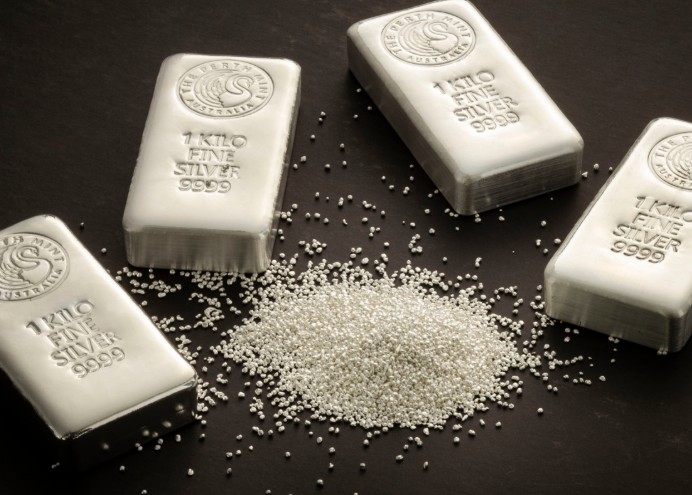
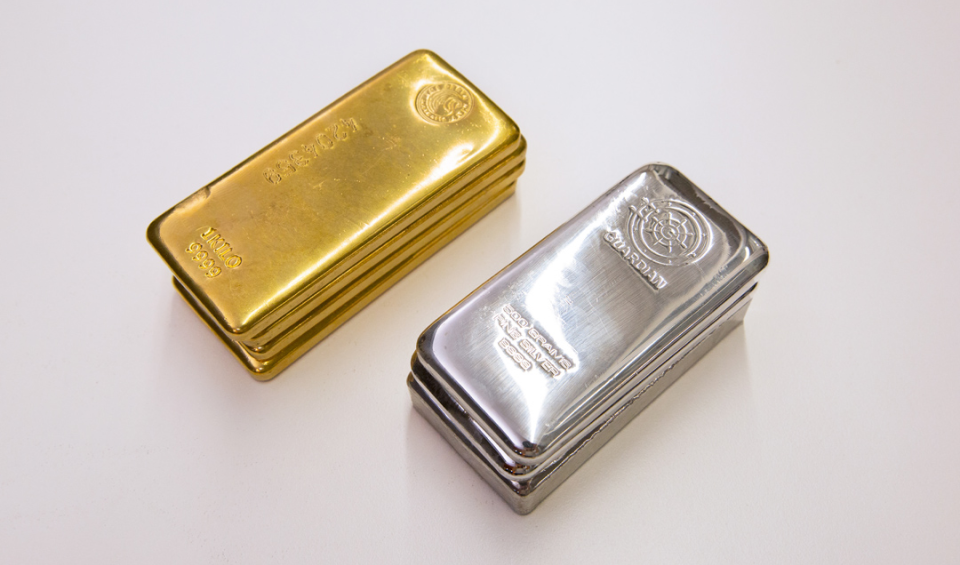
The final product is 99.9 per cent purity, although the cathode still needs to be melted down, granulated and then measured out into the right quantities for casting. The Perth Mint produces gold bars ranging from half an ounce up to 1 kg.
The silver refining process
Producing silver uses similar methods to refining gold, although during the electrolytic part of the procedure, the silver anode is instead dissolved in nitric rather than hydrochloric acid.
However, the cathodes are still 99.9 per cent purity and the process afterwards is much the same, although silver is typically cast into 100 oz or 1 kg bars. According to the Perth Mint, the silver dore bars it processes have a 10:1 ratio of silver to gold.